Leviathan
A giant flying whale shown at the CES 2014 keynote, then rebuilt for Sundance 2016 with an AR selfie app.
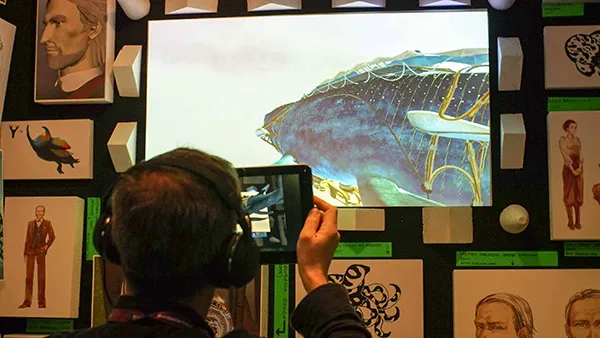
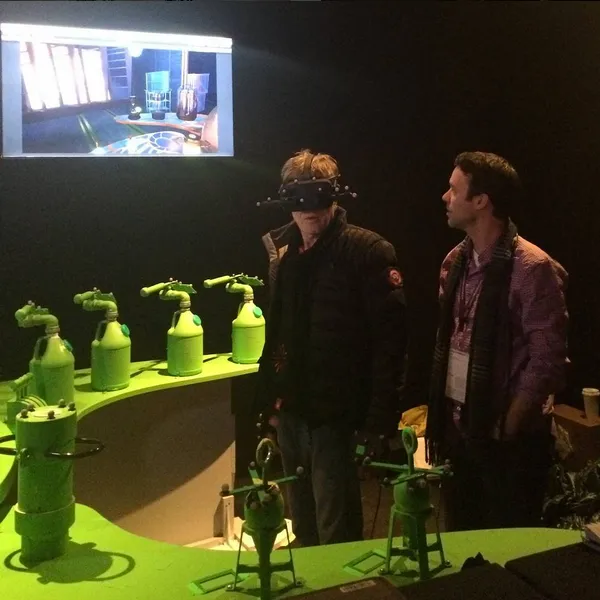
Intel and the USC World Building Media Lab created Leviathan, an experiment in storytelling that shatters the membrane between audience and content. It creates an immersive world in which audiences can engage, explore, and physically experience virtual environments and fantastic characters. The Leviathan is based on Scott Westerfeld’s novels (opens in a new tab).
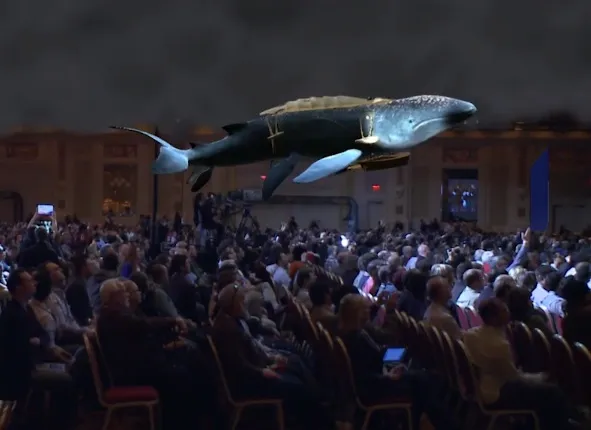
On January 6, 2014, at the Intel pre-conference keynote at CES in Las Vegas, we unveiled the Leviathan Project in public for the first time: a giant whale swimming above an audience of 5,000, with people reaching out to touch the creature flying overhead.
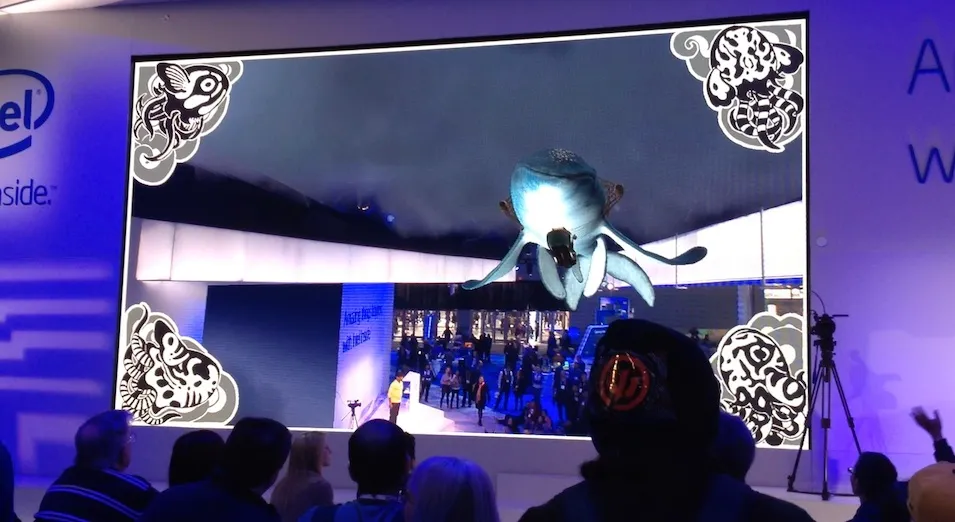
For this project I joined a small development team that created three Unity augmented reality demonstrations for the Intel keynote and booth. I contributed interaction design, programming, technology integration, and live operation.
Leviathan at Sundance
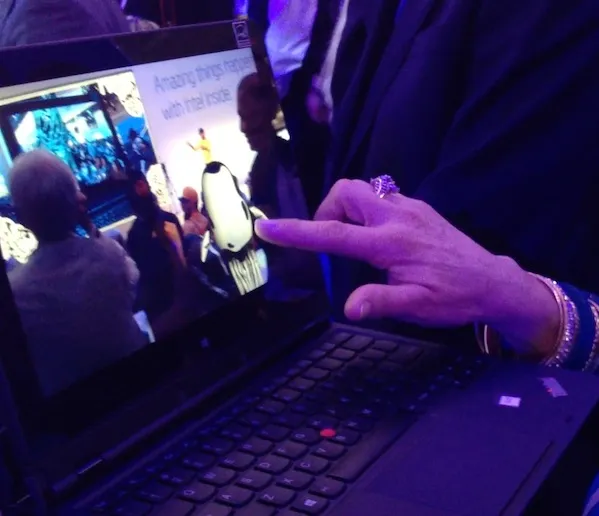
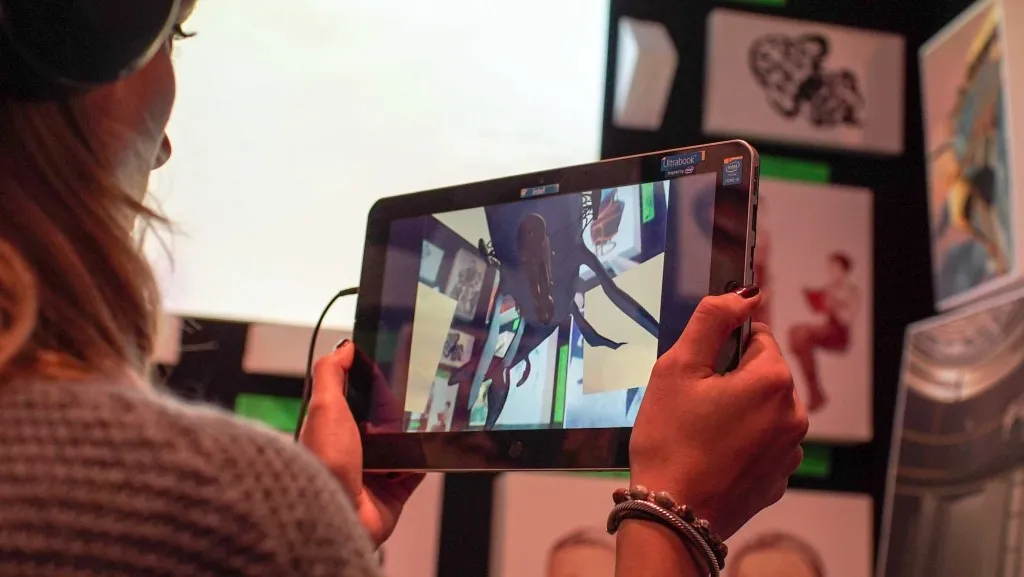
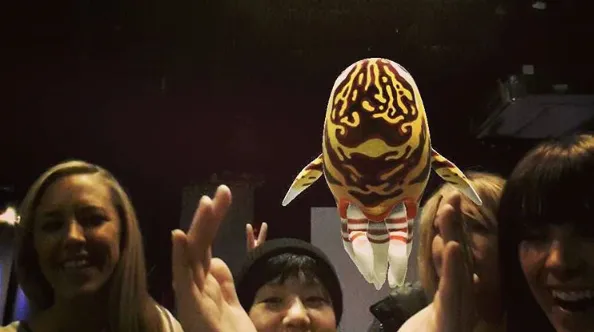
I teamed up once again with Alex McDowell and the talented teams from Wondros (opens in a new tab), Intel, USC (opens in a new tab), and Unity to help recreate the Leviathan project for an exhibit at Sundance 2016. I created an augmented reality (AR) mobile app that allows the guest to take selfies with 3D virtual characters from the Leviathan world. The app uses an AR library to see markers that unlock unique characters called Huxleys. The Huxleys are rendered by Unity over the camera feed and have some fun touch interactions. The guest can then take a picture and post to Instagram (opens in a new tab) to remember and promote the experience. The app was released in the App Store and Google Play for Sundance attendees.